🧠 What UPB is and how it works
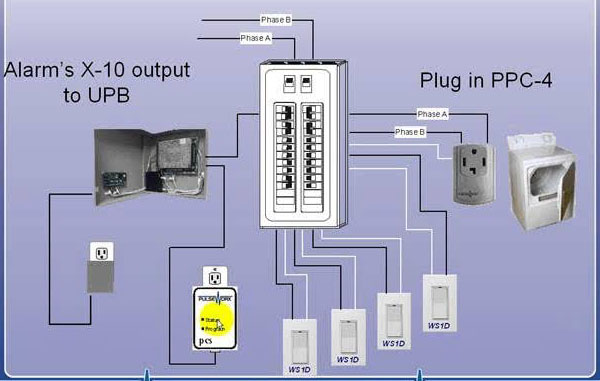
- Transport: Sends control signals over existing 120/240V power lines, no extra low‑voltage wiring needed.
- Scene logic: Creates lighting scenes with smooth fades and synchronized dimming.
- Topology: Typically benefits from a phase coupler to bridge signals across both electrical legs.
✅ Historic strengths
- Proven stability: For years, UPB was a go‑to for reliable scene control in retrofit projects.
- No RF planning: Power‑line signaling avoids wireless placement and interference planning.
- Solid dimming: Consistent ramp rates and scene performance across many loads.
⚠️ Limitations today
- Power‑line noise: Switching supplies, chargers, and some appliances can disrupt commands.
- Ecosystem momentum: Fewer new UPB devices and integrations compared to wireless ecosystems.
- Troubleshooting: Often requires filters, couplers, and circuit‑by‑circuit testing.
🚀 Modern alternatives to consider
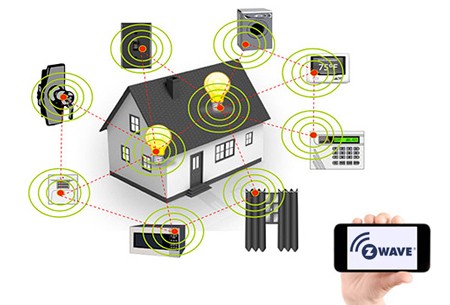
- Z‑Wave or Zigbee: Mesh networking, wide device selection, low‑power sensors, robust scenes.
- Wi‑Fi: Good for point devices where network coverage is strong.
- Matter: Increasing cross‑brand interoperability over Thread/Wi‑Fi with local control.
🔍 Technology Comparison
| Feature / Technology | UPB | Wi‑Fi | Z‑Wave | Zigbee |
|---|---|---|---|---|
| Communication Method | Power‑line | Wireless (2.4/5 GHz) | Wireless (900 MHz) | Wireless (2.4 GHz) |
| Reliability | High in low‑interference environments; reduced in modern homes | Good, but can be affected by network congestion | Very reliable mesh network | Reliable mesh network |
| Range | Up to 1 km (same transformer) | Depends on router coverage | ~30 m per hop (mesh extends range) | ~10–20 m per hop (mesh extends range) |
| Interference Risk | High in homes with many electronics | Medium (Wi‑Fi traffic, other devices) | Low | Low–Medium (shared 2.4 GHz band) |
| Wiring Required | Uses existing power lines | None | None | None |
| Best Use Cases | Older homes with minimal electronic noise | High‑bandwidth devices (cameras, streaming) | Lighting, locks, sensors, automation | Lighting, sensors, energy monitoring |
| Scalability | Limited by interference | High | High | High |
| Power Consumption | Low | Medium–High | Low | Low |
🖼️ Visual inspiration
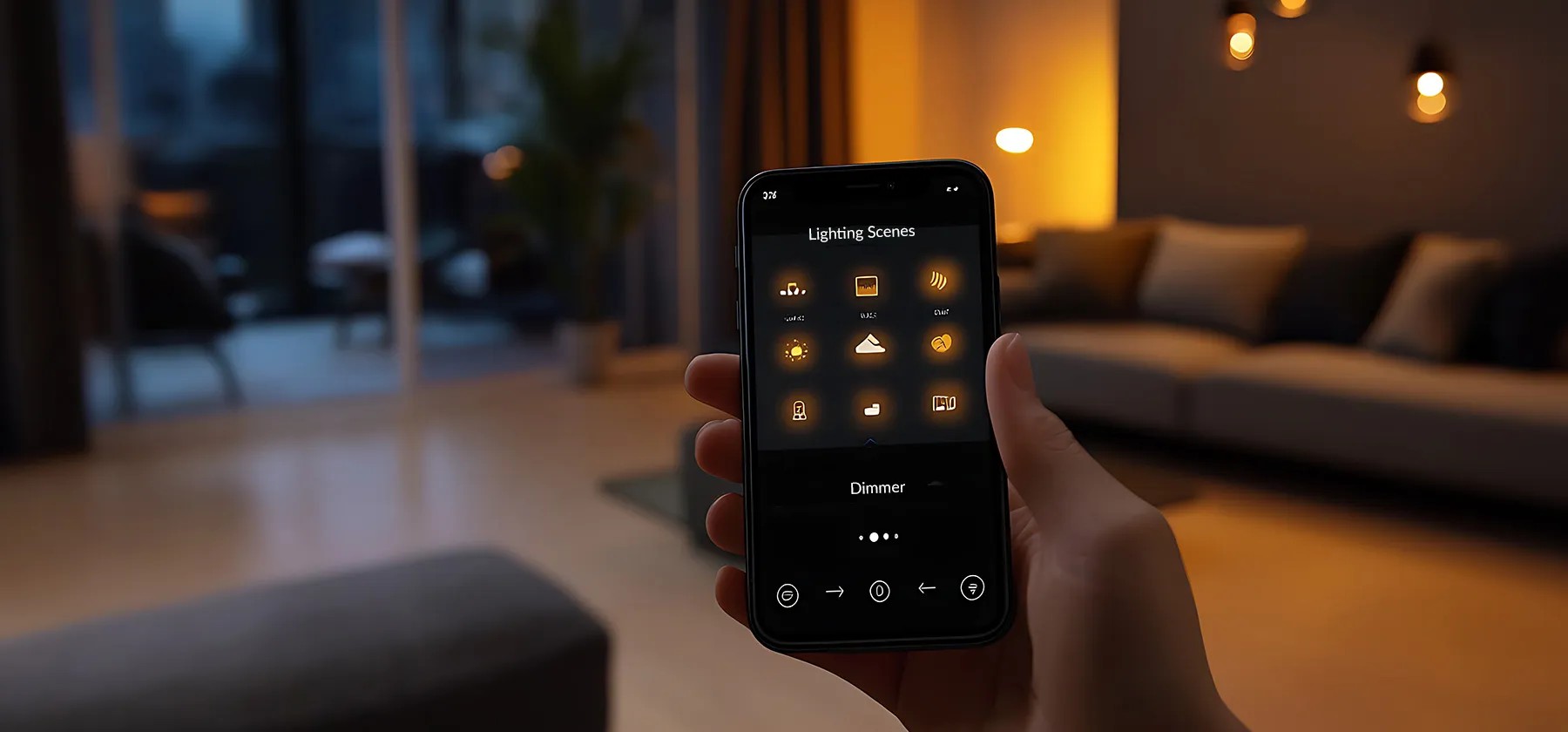
Picture this: You tap “Evening” — the great room fades to 40%, sconces warm to 20%, and the hallway glows softly. Whether that scene rides the power lines (UPB) or a modern mesh, the moment feels the same: effortless.